Fairy Meadows & Rakaposhi Base Camp Trek

Category

Most Popular Treks

Group Size

12

Duration

22 Dyas

Overview

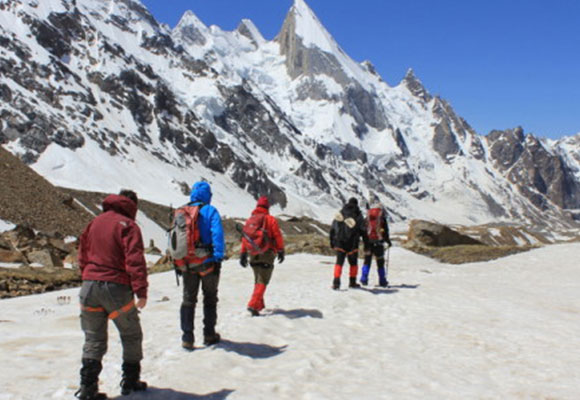
According to seasoned travelers, Rakaposhi and Nanga Parbat are two of the most beautiful mountains in the world. Similarly, Hunza and Fairy Meadows have no match in their scenic beauty. Both places and mountains have been selected for this great tour so that you can maximally enjoy the captivating beauty of the lofty mountains, green valleys and alpine meadows which the north of Pakistan have to offer. We will also not forget to have some interesting cultural heritage visits by stopping at ancient Buddhist rock carving sites, visiting the Baltit & Altit Fort, walking through the old Silk Road settlement of Ganish village and by going to the Kargah Buddha near Gilgit.

Region

Baltistan

Period

June to August

Level

Experienced

Comfort

Extreme

Itinerary

Arrive in Islamabad. Meet guide & transfer to the hotel. You can choose to take rest to recover from the long flight or go for a half or full day sightseeing tour.

Sightseeing tour in Islamabad will consist of a selection of some of the following sites (depending on available time & your interests): the Faisal Mosque, the Government buildings on Constitution Avenue, the Pakistan Monument, the  Lok Virsa heritage museum, Saidpur village, Daman-e-Koh to look out over the twin cities.

After breakfast we either fly to Gilgit and then drive to Chilas or (if the flight got cancelled or if preferred) drive towards Chilas by air conditioned bus / car over the famous Karakoram Highway (10 – 12 hrs - 480 Km) or via Naran / the Kaghan valley over the Babusar Pass (9-11 hrs – 400km). Chilas is a small bazaar town from where we can glimpse petroglyphs dating to the 1st century BC. Overnight at hotel in Chilas.

From Chilas we will go to Raikot Bridge where we transfer into 4X4 jeeps before heading to Tatto village. After arriving in Tatto village it is going to be a 3 hour trek to Fairy Meadows. Overnight stay in huts.

Full rest day at Fairy Meadows or make a day hike to visit to Beyal, Raikot face base camp of Nanga Parbat, overnight stay in huts.

We say goodbye to the beautiful Fairy Meadows and trek back down to Tatto Village from where we will take the 4x4 jeeps to Raikot Bridge. Transfer to A/C bus or car and proceed to Gilgit, here we can go for sightseeing in and around Gilgit, including the bazaar as well as the Kargah Buddha outside of town. Overnight at hotel in Gilgit.

From Gilgit we start early and head further north making a short stop at the the continental collision point at Chalt as well as at Rakaposhi viewpoint, from where we can have a close and wonderful view of Rakaposhi Peak (7788m) before reaching our destination: Minapin. Here we will make a day hike: walking along the Minapin River then going through a juniper forest following a trail that leads to the base of a waterfall at Bang-i-Das, in the end we reach the green grasslands of Hapakun. Here you will have northern views of Hachindar and Maiun Peaks, if we’re lucky Ibex can be seen on the cliffs above the Minapin glacier. Total 3 – 4 hours of trekking going up and 2 going down. Dinner and overnight in a guesthouse in Minapin.

It will only be a short drive to the capital of Hunza, Karimabad - we will go for sightseeing of Karimabad Bazaar and the Baltit Fort. At
the end of the afternoon we drive to Duikar to enjoy the beautiful sunset at the viewpoint above the Eagle’s Nest hotel. Overnight in a hotel in Karimabad, Altit or Duikar.

Visit to the Baltit Fort is of immense interest. For many years the fort served as an administrative headquarter and home to the former Mirs (rulers) of Hunza. The porters who accompanied the Balti bride for the then Mir of Hunza built it more than 700 years ago. The style of construction originates from Ladakh. A maze of rooms serving as living and administrative offices were added periodically designed with indigenous woodwork. It is strategically located on a prospect point, which gives it an immense overview of Hunza and neighboring valleys. Currently it serves as a Fort Museum with a good collection of exhibit of artifacts and musical instruments from Hunza. The fort is now administered by the Aga Khan Foundation Cultural Board, which undertook the reconstruction and re-establishment to its original grandeur

In the morning we can make a walk along the water channels to see the local life and meet some of the residents. After lunch we will visit Ganish village and the Altit Fort. Dinner & overnight at a hotel in Karimabad, Altit or Duikar.

Ganish Village is a small and ancient village on the KKH in central Hunza. Originally a single compact cluster of houses, greater Ganish now comprises about seven clusters of dwellings. Ganish was recognized for its strategic location on the breech of the Silk Road leading out of the Karakorum into Uighur China (Xinjiang). The historic village was restored by the Aga Khan Cultural Service focus on three physical components, Pharee, a historic water pond, Sawab Ha, (the house of benediction) two storied, and two roomed with carved wooden elements, Jataq open space used for the common and shared activities of the community and the Mosques The ancient house in Hunza has received the UNESCOs Heritage Award for 2009. The House, a 400-year-old architectural masterpiece, formerly used by envoy of Mir of Hunza.

Today we will make a nice trip to the Nagar Valley and Hoper glacier, a very beautiful area which also gives you the opportunity to meet the people of Nagar and to see everything from the other side (as Nagar Valley is opposite of Hunza Valley). You can also make a walk at Hoper glacier towards the actual glacier (1 hour each way). From there we drive onward to Gulmit / Passu (Upper Hunza) via the newly constructed road, making a stop at the sacred (carved) rocks at Haldeikish and driving past the Attabad Lake (which for some years you had to cross by boat as it was created by a massive landslide in 2010 which swept away an entire village as well as the main road). Dinner & overnight in Gulmit or Passu.

In the morning we will visit Passu glacier & Borith Lake, we will have several hiking options in this area, either between the glacier and the lake or starting from Gulmit village to Borith Lake or to Kamaris village and the Andra Fort. Depending on the available time we will explore Gulmit (the Gulmit museum, Gulmit Old House, Polo grounds) and or Passu or Ghulkin village in the afternoon. Overnight in Gulmit or Passu.

Passu Glacier is white and shining and deeply creased, and looks exactly what you expect a glacier to look like, most other glaciers in the area are covered in rocks and gravel. Above the glacier to the left the jagged line of the Passu and Batura peaks, seven of them over 7,500 meters. Some of these peaks are still unclimbed and are referred to by number, not name, on the map.

We will drive up to Sost and from there to the Khunjerab Top (border of Pakistan and China) for sightseeing. At the end of the afternoon we arrive back in Gilgit for our overnight stay.

The Khunjerab Pass is located in the extreme north-eastern corner of Pakistan. People have used the Khunjerab Pass area for thousands of years. Travelers to and from modern day China crossed one of the four main passes in the Khunjerab region; Kilik, Mintaka, Khunjerab, or Shimshal passes. The Khunjerab Pass at 4,733 meters is the highest border crossing on a paved road in the world. A red sign announces “China drive right” a rival green sing “Pakistan drive left”. The Khunjerab Pass is the continental watershed. Water on the Pakistani side flowing down to the Indian Ocean and on the Chinese side being swallowed up by the Taklimakan means literally, “If you go in you don’t come out”. The scenery is remarkably different on either side of the pass. Sost is the last village in Pakistan on the KKH. Sost Dry Port, Pakistani immigration and customs post. It stands at about 2,700 meters, 206 kilometers from Gilgit. The area around the Khunjerab Pass is a national park where – if you’re lucky – you can see Siberian Ibexes, Marco Polo sheep (ovis ammon poli), a Snow Leopard or other wildlife.

We leave early for the airport to catch our flight* to Islamabad, the afternoon can be spend at leisure or we can go for sightseeing for
example by visiting the Lok Virsa Folk & Heritage museum and or
Saidpur village (if you have not yet visited these sites on day 1) or Taxila. In case our flight got cancelled (or if preferred to travel by road) then we will have a full day of driving from Gilgit to Islamabad.

Depending on your flight departure time we will adjust the program – this would mean either only airport transfer in the morning or we can still have a half or full day of sightseeing in / around Islamabad.

End of our services – we hope you had a great trip!

Frequently Asked Questions

Breakfast: Our breakfast typically includes a variety of options such as omelets, fried or boiled eggs, fried Pakistani bread (paratha), chapati, toast, pancakes, porridge, cereal, jam, Nutella, honey, marmalade, cheese, and more, served with green tea, coffee, or milk tea.

Lunch: Unlike other trekking agencies, we offer a fresh, wholesome lunch instead of packed meals. This includes soup, tuna fish, boiled potatoes, eggs, assorted cookies, bread, cheese, dried fruits, and nuts, along with green tea, coffee, or juice.

Dinner: Each dinner begins with a warm soup, followed by a variety of dishes that change daily. These may include different vegetable dishes, a selection of meats (chicken, beef, or mutton), served with rice, noodles, pasta, lentils, potatoes, French fries, and chapati bread. For dessert, we offer fresh fruit or pudding at every meal.

Snacks: Between lunch and dinner, we provide a daily selection of snacks, such as cookies, pakoras, and popcorn, along with hot beverages.

Note: We accommodate specific dietary needs, including vegetarian, vegan, and lactose-intolerant diets. Please feel free to contact us for more information on dietary options.

The timing of your flight will depend on your specific itinerary and preferences, wherever possible. For the standard K2, K2 Gondogoro La, and Snow Lake treks, we typically schedule the flight on day 2 of your itinerary, flying from Islamabad to Skardu.


It's a valid question, as the news from Pakistan often focuses on the negative, but the image many people have abroad is far from the reality. While there were legitimate concerns in the past about safety, a lot has changed in recent years. The security situation has improved significantly, and the government has been making concerted efforts to promote tourism and facilitate travel.

When you visit, you'll quickly notice the warmth and hospitality of Pakistanis. They are eager to meet visitors and often extend invitations to their homes. Pakistan is a large and diverse country, and we only offer tours and treks to areas we consider safe. We currently do not recommend traveling to the border regions with Afghanistan and certain parts of Balochistan, but most other areas are safe to visit without any issues.

Yes and no, it is your own responsibility to select a trek that is suitable for you in terms of you personal fitness level as well as experience – if you book a private trek then you have all the flexibility to customize it and for example add extra days or extra supporting staff if needed. If you book a trek with an open group then we try to only let people join who have a certain experience level. Please don’t hesitate to contact us in case you would like us to help you select the best trek for you.

Yes, all the tours and treks that we offer on our website can be completely customized to your own requirements. We are also happy to design a tailor-made tour for you from scratch. Just let us know your preferences, special interests, number of days you have available etc. and we will send you our personalized itinerary suggestions.

For certain types of treks you will require a trekking visa – for example all the K2 treks. If a trekking visa is required then we will inform you accordingly during your booking, there are a lot of treks which are not in a restricted area and therefore you will only need a standard tourist visa.

If you have to apply for a standard tourist visa then 1 month in advance should be sufficient – in most cases you will receive your visa within a few days / a week – you should not apply more than 3 months in advance. If you have to apply for a trekking visa then you will need to be prepared for a longer processing time, we recommend to apply 3 to 2 months in advance.


Yes, it is possible to rent certain items from us or we will put you in contact with a trusted local supplier who can provide you with the things you need. Some of the standard gear which we can arrange are crampons, climbing belts, ice axes and climbing helmets.

The summer period is the main trekking season in the north of Pakistan. For most treks this would be from June to September with July and August being the best months.

This will depend on the type of tour that you are planning. Please make sure to consult your travel insurance before your trip to make sure you have proper coverage for your tour and the activities you will undertake. Especially when you go on a trek it is important to have mountain emergency search and rescue / repatriation by helicopter included in your insurance package.


Highlights

  • Gateway to Nanga Parbat: Fairy Meadows offers awe-inspiring views of Nanga Parbat, the world’s ninth-highest mountain. The meadows serve as a starting point for trekkers and climbers aiming to conquer this mighty peak.
  • Unspoiled Wilderness: The untouched beauty of Fairy Meadows is a paradise for nature enthusiasts. Lush green meadows, vibrant wildflowers, and a serene atmosphere create an enchanting setting.
  • Stargazing: Due to its remote location and minimal light pollution, Fairy Meadows is an excellent spot for stargazing. On clear nights, the sky comes alive with countless stars and celestial wonders.
  • Rakaposhi Trek:
  • Majestic Scenery: The Rakaposhi trek presents panoramic vistas of Rakaposhi, a stunning mountain in the Karakoram Range. The trek route is adorned with captivating landscapes, including glaciers, valleys, and alpine scenery.
  • Moderate Challenge: The trek offers a moderate level of difficulty, making it accessible to a wide range of trekkers. It’s an opportunity to challenge yourself while still enjoying the journey.
  • Cultural Interaction: Along the way, you may encounter local communities, providing insights into their way of life, traditions, and warm hospitality.
  • Hunza Valley:
  • Spectacular Panorama: Hunza Valley offers breathtaking views of towering peaks, including Rakaposhi and Ultar Sar. The valley’s beauty is complemented by terraced fields, fruit orchards, and the Hunza River.
  • Historical Gems: Discover historical forts, such as Baltit Fort and Altit Fort, which stand as witnesses to the region’s rich history. These architectural marvels provide insights into the past.
  • Cultural Immersion: Engage with the hospitable locals, learn about their traditions, and explore local markets for handicrafts, gemstones, and traditional cuisine.

What's Included

What's Not Included

Call Now Button